Preserving the Beauty: Steps to Clean Your Granite Headstone
Polished is remarkably durable — but regular cleaning keeps a headstone looking the way it was intended to look for generations. Here is a practical, step-by-step guide to safe cleaning, from gathering supplies to final inspection.

Before You Begin
Polished is dense and relatively forgiving, but it's not impervious to chemical damage. The wrong cleaner can permanently etch the polished surface, strip color fill from engravings, or accelerate biological growth by leaving residue.
Never use: bleach or chlorine products, vinegar or any acidic cleaner, pressure washing, wire brushes or abrasive pads, dish soap with high surfactant content, or shaving cream (a persistent myth that only leaves residue).
What you'll need: a bucket of clean water, a soft natural-bristle scrub brush (not wire, not stiff synthetic), optionally D/2 Biological Solution for biological growth, and soft cloths or sponges.
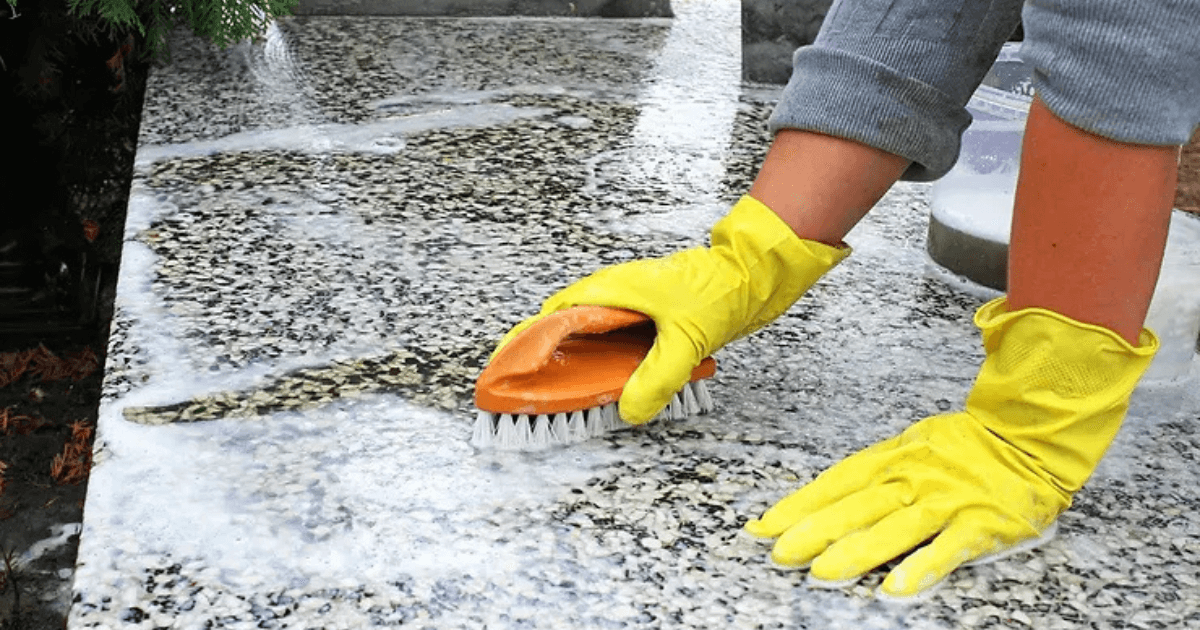
Step-by-Step Guide to Cleaning a Granite Headstone
Follow these steps for safe, effective cleaning of a polished memorial.
- Step 1: Wet the entire stone thoroughly with clean water — work in the shade when possible to prevent solutions drying too fast
- Step 2: Mix D/2 Biological Solution per label directions (typically 1 part D/2 to 3 parts water) for biological staining; for simple surface grime, plain water is sufficient
- Step 3: Apply the solution to the stone with a soft natural-bristle brush in gentle circular motions or working with the letter edges — never scrubbing against the grain of carved letters
- Step 4: Let the solution dwell on the stone for 2–5 minutes; do not let it dry on the surface
- Step 5: Rinse thoroughly with clean water — multiple rinses may be needed to remove all solution
- Step 6: For biological growth (lichen, moss, algae), D/2 continues working after rinsing as additional rain falls — you may not see full results for 30–60 days
- Step 7: Inspect the surface in good light — verify all is clear and all color fill (if any) is intact
- Step 8: Repeat annually or when visible soiling warrants