Headstone vs. Grave Marker: What's the Difference and Which Is Right for Your Family?
Choosing a memorial for a loved one can feel overwhelming, especially when terms such as headstone, grave marker, monument, and memorial are used interchangeably.
If you are comparing a headstone vs. grave marker, the biggest differences usually involve the memorial's shape, height, visibility, available inscription space, and cemetery requirements.
A grave marker can be a simple flat stone set at ground level, while a headstone often refers to a more prominent upright or raised memorial. However, the terminology is not completely standardized, so the best way to compare your options is to look at the actual memorial styles available.
Headstone vs. Grave Marker: What's the Difference?
The terms headstone and grave marker are often used to describe the same general purpose: a permanent memorial identifying and honoring someone buried at a cemetery.
The distinction is usually based on the design. A grave marker often refers to a lower-profile memorial, particularly a flat marker that sits level with the surrounding ground. A headstone commonly refers to a raised or upright memorial that is easier to see from a distance.
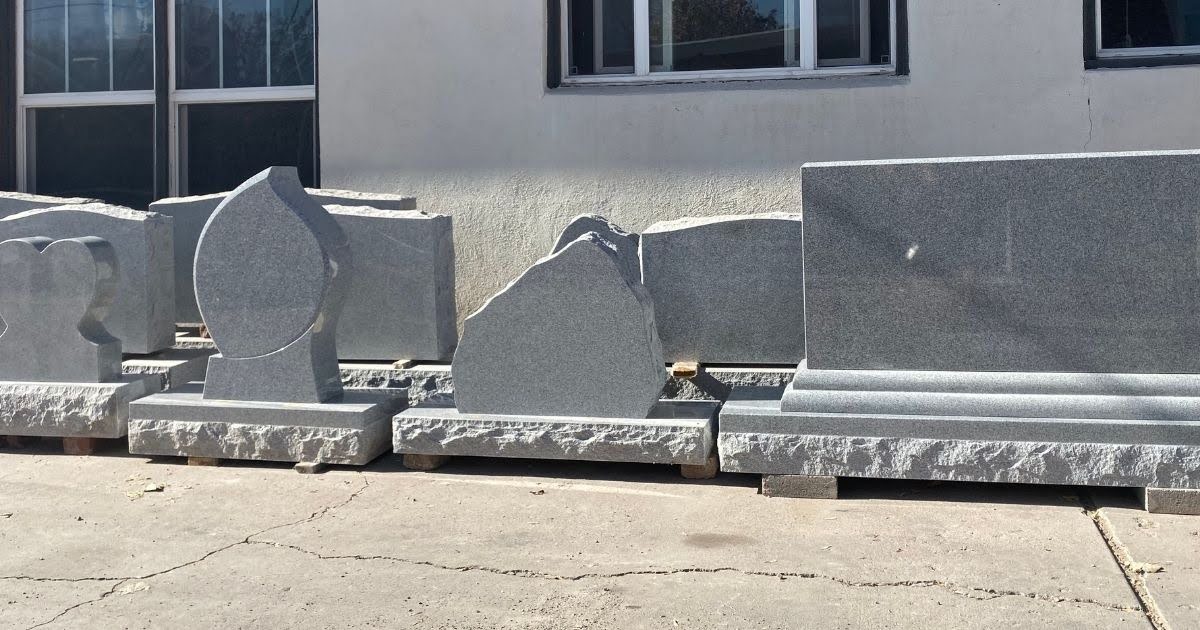
There are several styles between those two descriptions. The Monument Builders of North America identifies common options including flat markers, bevel markers, slant markers, horizontal tablets, vertical tablets, ledgers, and garden memorials.
When comparing a grave marker vs. headstone, do not focus too heavily on the terminology. Instead, compare the style, size, personalization options, cemetery rules, and overall appearance.
Common Types of Grave Markers and Memorials
Different memorial styles can create very different appearances in a cemetery. Your choice may also affect how much room you have for names, dates, artwork, photographs, or longer inscriptions.
Flat Grave Marker
A flat grave marker sits level with the ground. Because of its low profile, it creates a simple, understated appearance and can be a practical choice for cemeteries with strict landscaping or monument regulations.
Flat markers can be made from materials such as granite and may include names, dates, inscriptions, artwork, and other personalization.
Their low profile can also make them less visually prominent than an upright memorial. For families who prefer a clean and simple design, however, that can be an advantage.
Bevel Marker
A bevel marker is similar to a flat marker but is raised slightly above ground level. The angled top gives the memorial more visual definition while maintaining a relatively low profile.
This can be a useful middle ground for families who like the appearance of a ground-level marker but want the inscription to be somewhat more elevated and visible.
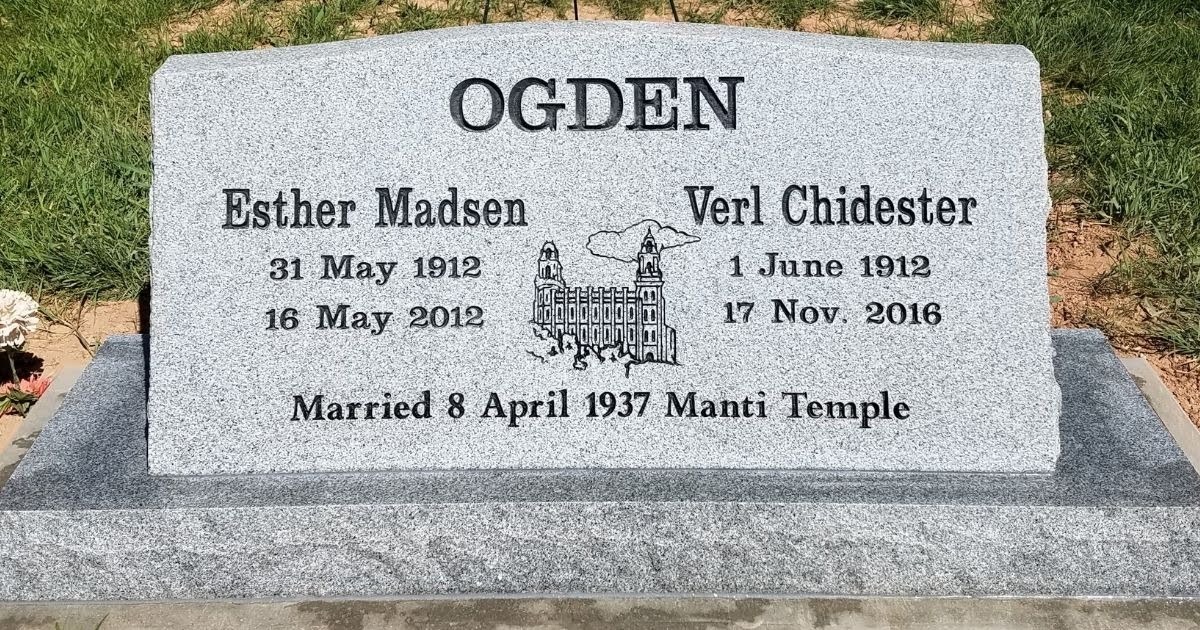
Slant Headstone
A slant headstone has a taller, angled face that slopes backward. It provides more visual presence than a flat or bevel marker without reaching the height of a traditional upright monument.
The angled face can also create an attractive presentation for names, dates, inscriptions, and decorative elements. Richfield Monuments offers slant headstones as one of its memorial styles in its monument design gallery.
Upright Headstone
An upright headstone is one of the most recognizable cemetery memorial styles. It typically consists of a vertical stone, often called the die, mounted on a base.
The additional height provides greater visual presence and generally gives families more room to work with when planning inscriptions and artwork. Upright monuments can also accommodate more elaborate designs, including photographs, symbols, multiple names, and longer inscriptions.
However, an upright headstone is not automatically permitted in every cemetery. Cemetery regulations can establish requirements for dimensions, materials, placement, foundations, and other design details. Richfield Monuments' guide to Utah headstone style restrictions explains why families should confirm cemetery requirements before finalizing a design.
Companion or Family Monument
Families purchasing a memorial for two people may consider a companion monument. These larger memorials can provide space for two names and inscriptions while creating a unified design for spouses or family members.
A family monument can also be useful when planning a family plot where multiple future burials may eventually be represented.
How Do You Choose Between a Headstone and Grave Marker?
There is not one memorial style that is right for every family. The better choice depends on the cemetery, the desired appearance, the amount of personalization you want, and how you envision the memorial being viewed for generations.
1. Check the Cemetery's Requirements First
This should be the first step, not the last. Some cemeteries have specific requirements for memorial dimensions, materials, foundations, placement, and style. A family may love a particular upright headstone design only to discover that the cemetery allows only a certain size or type of marker.
Before paying a deposit or approving a final design, ask the cemetery for its current memorial regulations.
2. Consider How Much You Want to Personalize the Memorial
Think about what you want the memorial to communicate. A simple flat marker may provide enough room for a full name, birth and death dates, a short inscription, and a small decorative element.
An upright monument generally gives you more design flexibility. Depending on the size and cemetery restrictions, families may incorporate longer inscriptions, photographs, religious symbols, hobbies, scenic artwork, or other details that tell more of the person's story.
3. Think About Appearance and Visibility
A flat marker blends more closely into the landscape. An upright headstone has a stronger visual presence and can be easier to identify while walking through a cemetery.
Neither is inherently better. The right choice depends on the look your family prefers and the character of the cemetery where the memorial will be installed.
4. Consider Durability and the Local Climate
A memorial is intended to remain outdoors for many years, so material selection matters. Granite is widely used for modern memorials because of its strength and resistance to weathering.
The specific stone, finish, engraving method, foundation, installation, and surrounding environment can all affect long-term appearance.
5. Compare the Total Cost, Not Just the Stone
When comparing a flat marker, slant headstone, or upright monument, remember that the memorial itself may not be the only expense.
Depending on the cemetery and memorial, families may need to consider stone and manufacturing, engraving or additional lettering, artwork or photographs, foundation requirements, installation, cemetery fees, and delivery or other services.
Ask for a complete estimate so you can compare options accurately.

What About Cemetery Rules in Utah?
Cemetery requirements vary, so there is not one set of rules that applies to every cemetery in Central Utah.
A cemetery may regulate the maximum width and height, thickness of the stone, type or color of material, shape and style of monument, foundation or base, placement within the grave space, number of names or inscriptions, and installation process.
This is one reason working with a monument provider familiar with local cemeteries can be helpful.
Which Memorial Style Is Right for Your Family?
A useful way to narrow down your options is to start with your family's priorities. Choose a flat grave marker if you prefer a simple, understated appearance, your cemetery requires a low-profile memorial, or you do not need a large amount of inscription space.
Consider a slant marker if you want more visibility than a flat marker provides. Consider an upright headstone if you want a traditional, prominent memorial with more room for inscriptions and artwork. Consider a companion or specialty monument if you are memorializing two people together or planning a family plot.
The best choice is ultimately the one that fits the cemetery requirements and feels appropriate to your family.
Start With the Cemetery, Then Design the Memorial
The simplest way to approach the decision is to work through the choices in this order: confirm the cemetery's rules, determine the available grave space, decide whether you prefer a flat, slant, upright, or specialty memorial, determine how much inscription and personalization you want, choose the stone, color, finish, and design details, review the full price, and approve the final design and coordinate installation.
Taking these steps in order can prevent costly changes later and gives your family time to focus on the memorial itself.
Final Thoughts
The difference between a headstone and grave marker is largely a matter of style, profile, and terminology. Flat markers offer a simple, low-profile option, while slant and upright memorials provide increasing visibility and design space.
The right choice for your family should begin with the cemetery's requirements and then move to your preferences for appearance, personalization, durability, and budget.
With those factors in mind, you can choose a memorial that is both appropriate for the cemetery and meaningful to the people who will visit it for years to come.