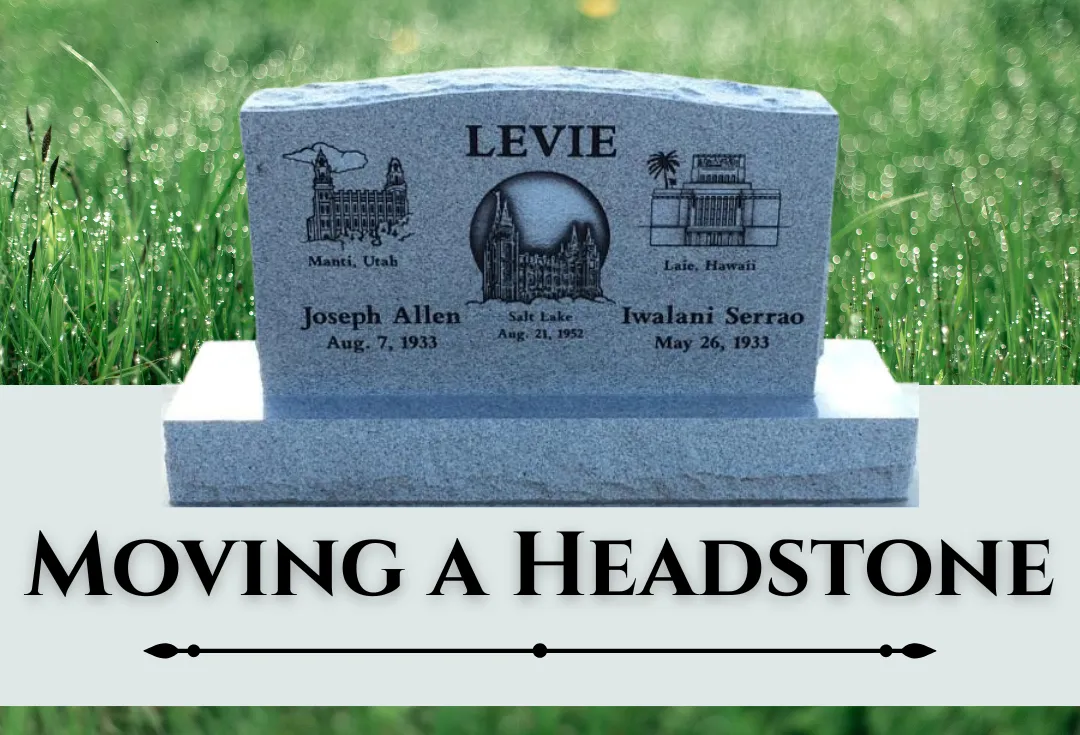
Can You Move a Headstone to Another Cemetery? Laws in Utah
What Does Moving a Headstone Mean?
Moving a headstone to another cemetery typically involves:
Disinterment/reinterment of the remains (if they are moved).
Removal of the monument (the headstone) from its current location.
Transporting the monument to a new cemetery and installing it there.
In some cases, only the headstone is moved (if remains stay in place), but often the two are connected.
Legal & Policy Considerations in Utah
Moving a headstone (and possibly the remains) in Utah involves several layers of regulation. It’s not just a matter of lifting the stone. Here are the key legal and policy factors to consider:
1. Disinterment Laws
Disinterment (removing human remains) is tightly regulated in Utah. If remains are to be moved (not just the headstone), the cemetery, local health authorities, and sometimes courts must approve.
Permits are usually required, and public health & safety concerns must be addressed.
2. Cemetery Approval & Ownership Rights
Cemeteries have rules about whether monuments can be removed or moved. Some require written permissions, proof of burial rights, or next-of-kin authorization.
If you own the plot or are the legal representative, you’ll generally have the standing to request moving the headstone. But you’ll also need approval from both the old cemetery (where it currently is) and the destination cemetery.
3. Local / Municipal Ordinances
Many Utah cities have specific codes governing cemetery monuments. For example, in Uintah, UT the “Moving Of A Monument” must be approved by cemetery staff. (American Legal Publishing)
The city often requires a professional monument company to perform the move if the headstone is large or complex. (American Legal Publishing)
4. Cemetery Policies & Fees
There may be fees involved: removal, transport, reinstallation, foundation work, inspection.
Some cemeteries may charge for permits or review of the move.
The destination cemetery must agree to accept the monument, and it must meet their monument size, style, and material guidelines.
5. Condition of the Monument
If the headstone is old, damaged, or using materials that aren’t durable, some cemeteries may refuse to accept it or require restoration.
Fit for transport: heavy granite monuments require careful handling, structural stability, and sometimes engineering review.

What Utah Laws / Rules Say (Examples)
Here are specific examples from Utah’s municipal and county laws that touch on moving or relocating monuments:
Uintah, UT – “Moving Of A Monument”
The City Code says that moving a monument must be approved by cemetery staff. The size, condition, and whether a professional monument company is needed can be dictated by the cemetery staff. (American Legal Publishing)Toquerville, UT – Cemetery Policy
Toquerville’s cemetery policy states that the plot owner or family is responsible to arrange and pay for movement or relocation of all headstones when a grave is opened and closed. This suggests some precedent or mechanism within local rules for moving memorials. (Toquerville UT)City / County Cemeteries
Depending on the jurisdiction, cemetery rules might require monument removal/install permit, structural review, and compliance with materials and foundation guidelines. (For example, criteria for monument installation, permits, foundation specs are common across many Utah cemeteries.) (American Legal Publishing)
Practical Process: How To Move a Headstone in Utah
If you’re considering moving a headstone, here’s a practical step-by-step approach based on Utah practice and typical monument company workflow:
📋 Step-by-Step Guide
Confirm Ownership & Burial Rights
Have documentation showing you own the burial rights or have permission of all legal heirs.Contact the Current Cemetery
Ask:Are you allowed to move both the headstone and remains (if needed)?
What permits or approvals are required?
What policies and fees apply?
Contact the Destination Cemetery
Ensure:They accept relocated monuments.
The headstone meets their specifications (size, material, design).
There are costs for installation and foundation.
Assess the Monument Condition
Is it structurally sound?
Will it handle transport?
Does it need repair or restoration before moving?
Hire a Professional Monument Company
A company experienced with relocation can ensure:Safe removal and packaging.
Legal compliance.
Proper reinstallation (foundation, anchoring).
Obtain Necessary Permits
Permits may be needed for disinterment (if remains), cemetery relocation, installation, and possibly local building or health department permits.Move the Monument & Remains (if applicable)
For remains: reinter in the new cemetery.
For the headstone: move, set up on a proper new foundation, level, anchor, etc.
Update Records
Update the burial records at both old and new cemeteries. Make sure the new location is documented for future reference by family.

Challenges & Considerations
Moving headstones is possible, but there are challenges:
Cost: Transport, permits, foundation work, and labor add up.
Physical risks: Heavy stone, risk during lifting/shipping, potential damage to inscriptions.
Regulatory delay: Approvals can take time—cemetery boards, city codes, health departments may be involved.
Emotional & historical concerns: Some cemeteries resist moves because of historical layout or cultural sensitivities.
Alternatives If Moving Isn’t Feasible
If moving the headstone to another cemetery is not approved or is too expensive, some alternatives include:
Duplicate Memorial: Install a second marker or plaque in a different cemetery.
Transfer of inscription: Sometimes families transfer the inscription to a new stone while leaving the original in place.
Cleansing / Restoration: Refresh or restore the existing monument so it continues to serve its purpose where it stands.

Final Thoughts
So, can you move a headstone to another cemetery in Utah? Yes—but only under the right conditions. It’s not automatic; it requires permissions, approvals, logistics, and often expenses.
For families considering this, working with a trusted monument company and coordinating with both cemeteries is essential. Proper documentation, ensuring the monument meets all requirements, and preparing for the cost are all part of making it possible.
If you’re in Central Utah and considering moving a headstone, Richfield Monuments can help you through the entire process—from verifying legality to selecting a compliant monument, to removal and reinstallation.
