How to Clean and Maintain a Headstone Over Time
A headstone is more than a marker; it is a lasting tribute, a physical representation of a life, and a place for family and friends to remember and reflect. As a piece of outdoor architecture, it faces constant assault from the elements: sun, rain, wind, pollutants, and organic growth like moss and lichen. To ensure this enduring memorial remains legible and beautiful for generations, routine care and maintenance are essential.
At Richfield Monuments, we understand the importance of these memorials. With over 130 years of experience crafting high-quality , , and monuments, we know what it takes to make a tribute last. This guide provides professional, step-by-step advice on how to properly clean and maintain a , helping you preserve its beauty and integrity for years to come.
The Golden Rule: Do No Harm
The most important principle of care is to avoid causing damage. Many common, well-intentioned cleaning practices can permanently harm the stone. Before you begin, always assess the stone's condition. If it has deep cracks, flaking, or appears unstable, do not attempt to clean it yourself. In these cases, consult a professional monument company like Richfield Monuments for advice on restoration.
1. Gather the Right Supplies
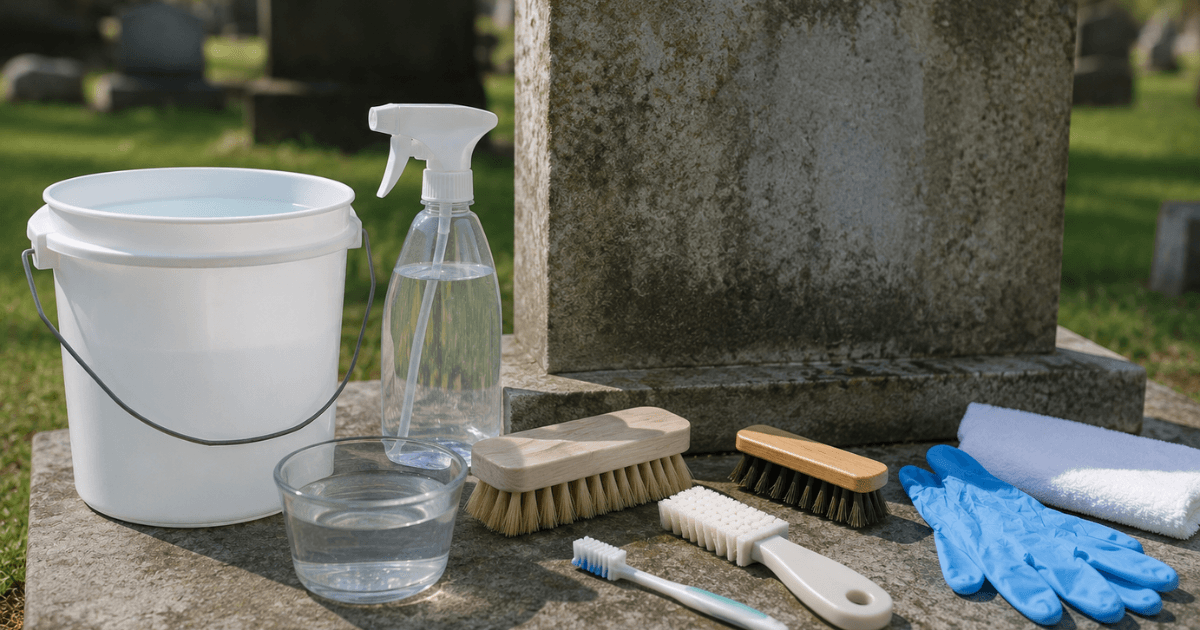
When cleaning a , gentleness is key. Use clean water as your primary cleaning agent. For very soft or porous stones like marble, distilled water is preferable to avoid introducing minerals.
Use soft-bristled brushes only. Natural bristle brushes (like horsehair), soft nylon brushes, or a soft toothbrush for delicate details are ideal. Never use wire brushes.
If needed, use a non-ionic soap or a very mild dish soap like Dawn and test a small, inconspicuous area first. A plastic scraper can be used carefully to lift thick lichen or moss, but a soft brush is usually preferable.
For heavy biological growth, use a product specifically designed for headstones, such as D/2 Biological Solution.
2. The Cleaning Process
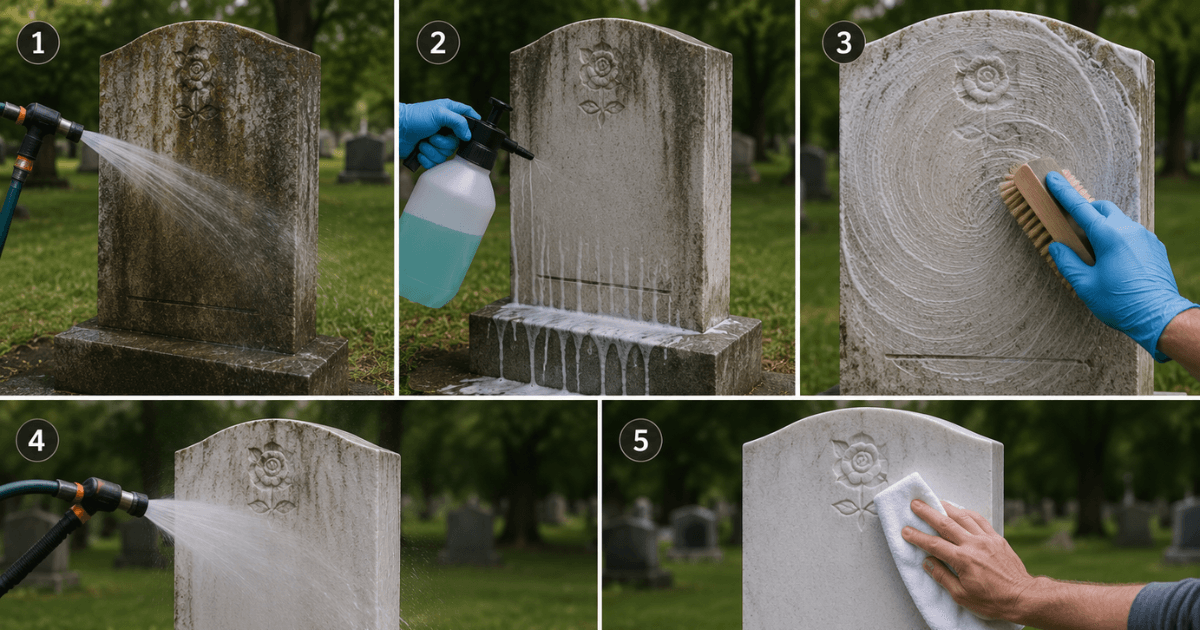
Begin by thoroughly wetting the entire with clean water. This prevents dry grit from scratching the surface and helps cleaning solutions work effectively.
Apply your soap solution or approved biocidal cleaner from the bottom and work your way up to prevent streaking from runoff.
Using your soft brush, gently scrub the surface in a circular motion. Pay extra attention to areas with organic growth and work carefully around delicate lettering and carvings.
Rinse completely with clean water. Residual soap or cleaner can attract dirt and may cause damage over time.
Allow the to air dry, or blot gently with a soft lint-free cloth to reduce water spots.
Materials You Must Avoid
Never use bleach (chlorine), vinegar, ammonia, or household cleaners. These can react with stone and cause pitting, discoloration, and surface deterioration.
Avoid abrasive products like powdered cleansers that scratch and dull polished surfaces. Do not use pressure washers, which can chip, crack, or erode inscriptions.
Wire brushes and metal tools should also be avoided because they create scratches and micro-fissures where water and dirt collect, accelerating future damage.
1. Understand Your Stone
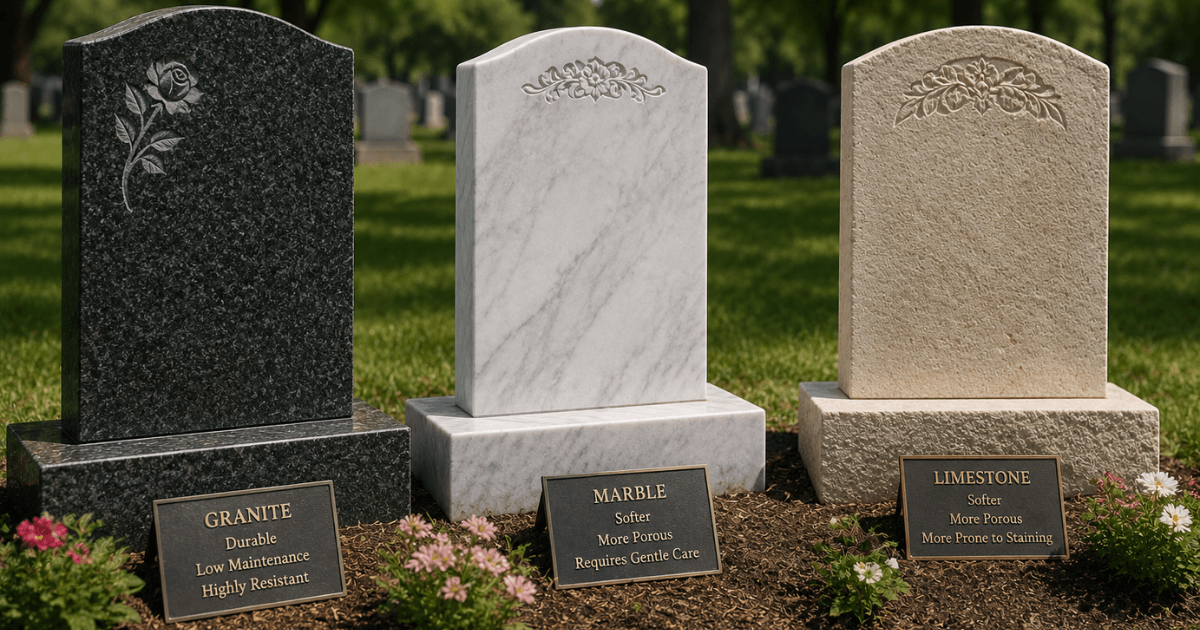
Different materials require different levels of care. is the most durable and generally requires the least maintenance, making it an excellent choice for long-lasting memorials.
Softer stones such as and limestone are more porous and prone to staining, so they require gentler methods and more frequent attention.
2. Regular Inspections and Light Cleaning
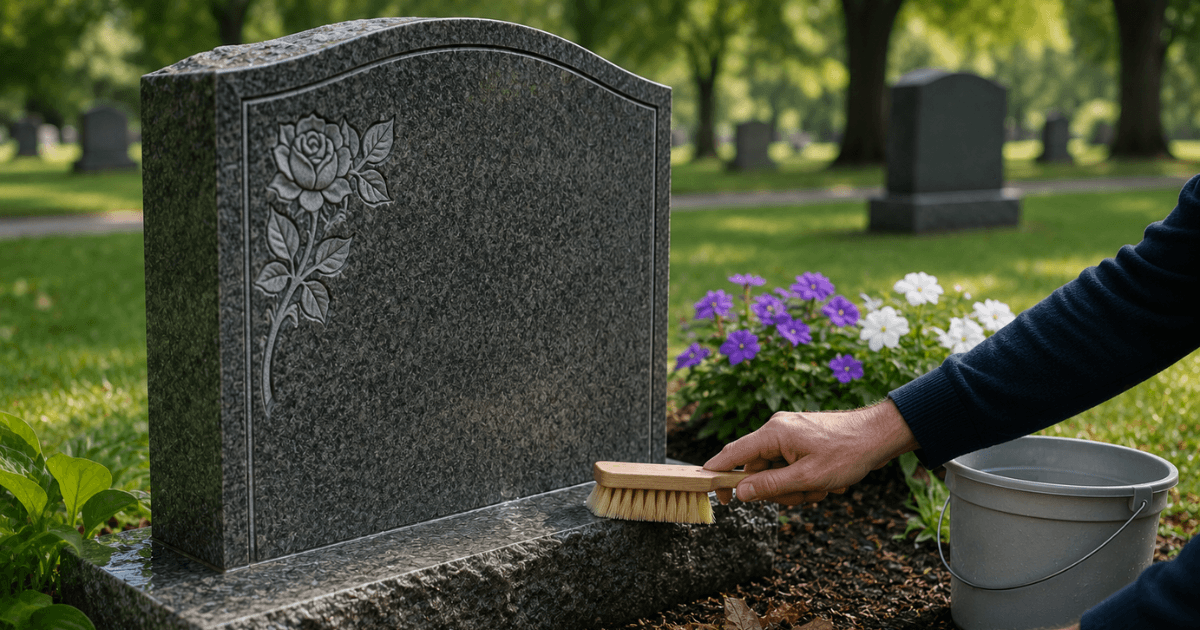
Check the regularly for signs of damage, wear, or staining. A simple rinse with water and a soft brush once or twice a year is usually enough to keep a monument looking its best.
Remove leaves, flowers, and debris promptly, as decomposing organic matter can leave stubborn acidic stains.
3. Monitor the Surroundings
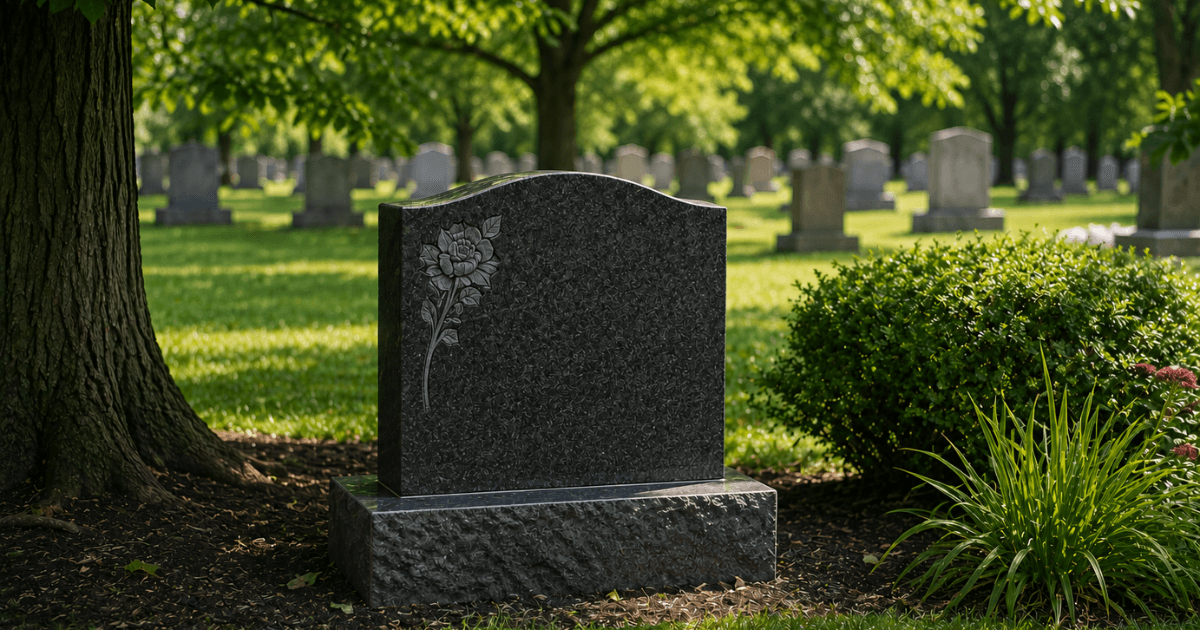
Pay attention to nearby trees and shrubs. Heavy shade encourages moss and lichen growth, so trimming branches to increase sunlight and airflow can help reduce biological buildup.
Also watch for plants with aggressive roots that can destabilize the monument over time.
4. When to Call a Professional
If a has deep stains, persistent biological growth that does not respond to gentle cleaning, or structural issues such as cracking or sinking, call a professional.
Richfield Monuments offers expert advice and full-service support to help restore and preserve your loved one's memorial for generations to come. Contact us at https://richfieldmonuments.com/contact-us.