Can Cremation Ashes Be Buried with a Headstone? Utah Laws Explained
Cremation is increasingly common in Utah — and with it, questions about how cremated remains can be buried and marked with a permanent memorial. Utah law is relatively permissive, but cemetery rules vary, and the options for marking a cremation burial are broader than many families realize.

Utah Law: What's Allowed with Cremated Remains
Utah law permits cremated remains (cremains) to be buried in a licensed cemetery, stored in a columbarium niche, scattered in designated areas (with applicable permits for public lands), or kept on private property. Each option has different requirements and implications for permanent memorialization.
In-ground burial of cremains is permitted in most Utah cemeteries and follows the same basic permit process as traditional burial. A burial permit is required; the cemetery issues its own interment permit. The cremation container must typically meet the cemetery's specifications.
- In-ground burial: requires a burial permit and cemetery interment permit
- Columbarium niche: an above-ground storage vault within a cemetery structure
- Scattering: permitted on private property with landowner consent; requires permits on public lands
- Private property storage: legally permitted in Utah; affects property title if buried
- Some cemeteries allow multiple cremains in a single plot — confirm with the specific cemetery
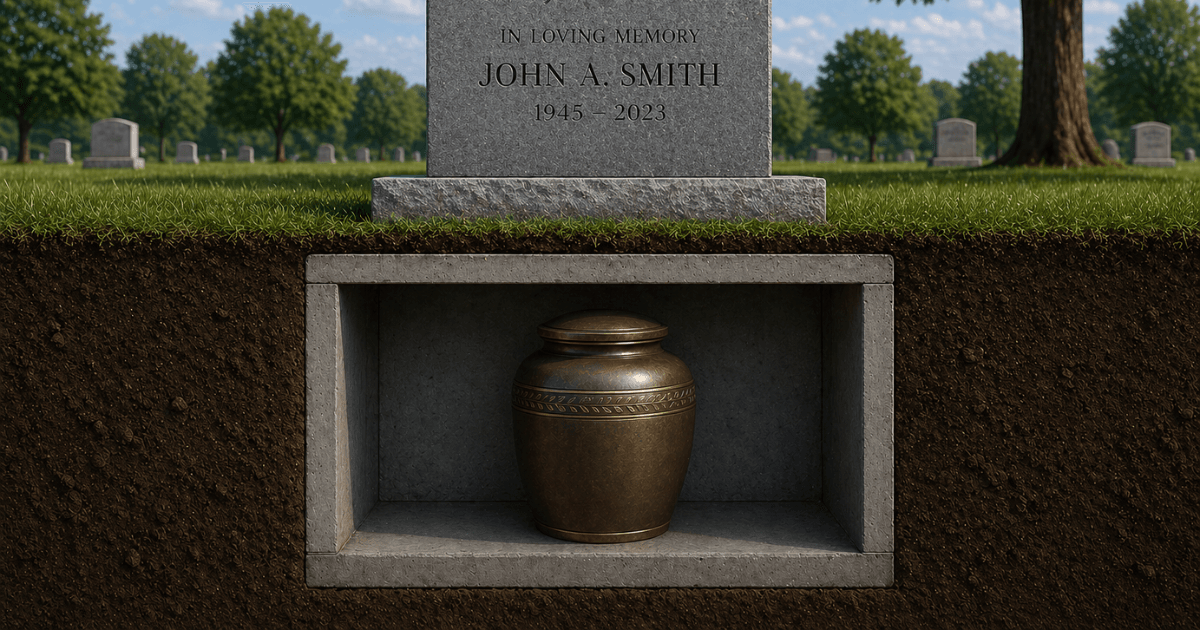
Cemetery Rules: Where and How Can You Bury Cremains in Utah?
Cemetery rules for cremains vary more than state law. Many Utah cemeteries have designated cremation sections with specific plot sizes and monument allowances that differ from traditional burial sections. Some allow cremains to be added to an existing occupied traditional plot (with appropriate permits); others do not.
Columbarium niches are available at many Utah cemeteries and some mausoleums. Niche fronts (the memorial panel visible on the columbarium wall) are typically plaques — , , or composite — rather than freestanding headstones.
- Cremation sections often have smaller plots with proportionally smaller monument allowances
- Some cemeteries allow cremains to be added to an existing family plot — confirm before assuming
- Columbarium niches use plaque-style memorials on the niche front
- Monument style, size, and material requirements in cremation sections may differ from traditional sections
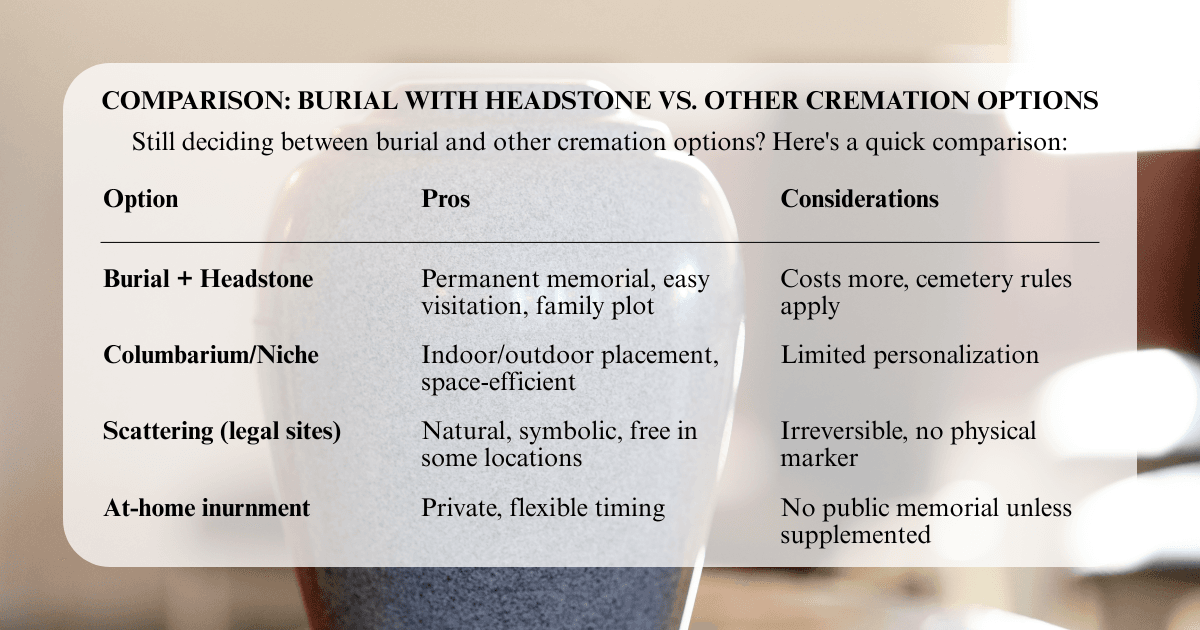
Headstone Options for Cremation Burials
A cremation burial site can be marked with the same range of memorials as any burial — upright monuments, slant markers, flat markers, or custom shapes — within the size limits of the cremation plot. The smaller plot dimensions typically mean a smaller monument, but not a less personal one.
For columbarium niche memorials, Richfield Monuments produces custom and niche plaques with full personalization: portraits, custom artwork, engraved inscriptions, and any design element the family chooses.
Companion cremation plots — where two individuals' cremains are interred side by side — can be marked with a single companion monument spanning both spaces, exactly as with traditional companion burials.