Can You Install a Headstone on Private Land in Utah?
Private land burial — burying a loved one on family-owned property rather than an established cemetery — is a practice with deep roots in American rural culture. Utah law permits it under specific conditions, but the requirements are more complex than many families realize, and the practical implications extend well beyond the initial burial.
What Utah Law Requires for Private Land Burial
Utah does permit burial on private property, but it requires compliance with state and county regulations that vary by location. Generally, you'll need to file a burial permit with the Utah Office of Vital Statistics, notify the county health department, and comply with any local zoning ordinances that may apply to the property.
Minimum setback requirements from water sources, property lines, and structures typically apply. Some counties have additional restrictions or outright prohibit private land burial in certain zoning designations. Researching your specific county's rules — not just state law — is essential before proceeding.
- A burial permit from the Utah Office of Vital Statistics is required for every burial
- Notify the county health department — local regulations vary significantly
- Setbacks from wells, streams, property lines, and structures are typically mandated
- Zoning restrictions may prohibit private land burial in suburban or urban parcels
- The burial must be recorded as a deed restriction on the property title
Consulting Professionals Before Proceeding
Before committing to a private land burial, consult with a Utah attorney familiar with property and probate law. The burial must be recorded as a deed restriction on the property, which affects future sale or transfer of the land. Any future owner of the property — including your own heirs — must deal with the presence of a burial site.
Counties in Central Utah vary considerably in their approach to private land burial. Sevier County's rules differ from those in rural Garfield or Wayne County. A call to the county health department and a conversation with a local attorney are the two most important first steps.
- Recording requirements mean the burial affects the property title permanently
- Future property sales may be complicated or reduced in value by a recorded burial site
- Heirs inherit responsibility for maintaining the burial site even if they sell the surrounding land
- Disinterment (moving remains later) requires a separate permit and is more difficult from private land
Proper Installation on Private Land
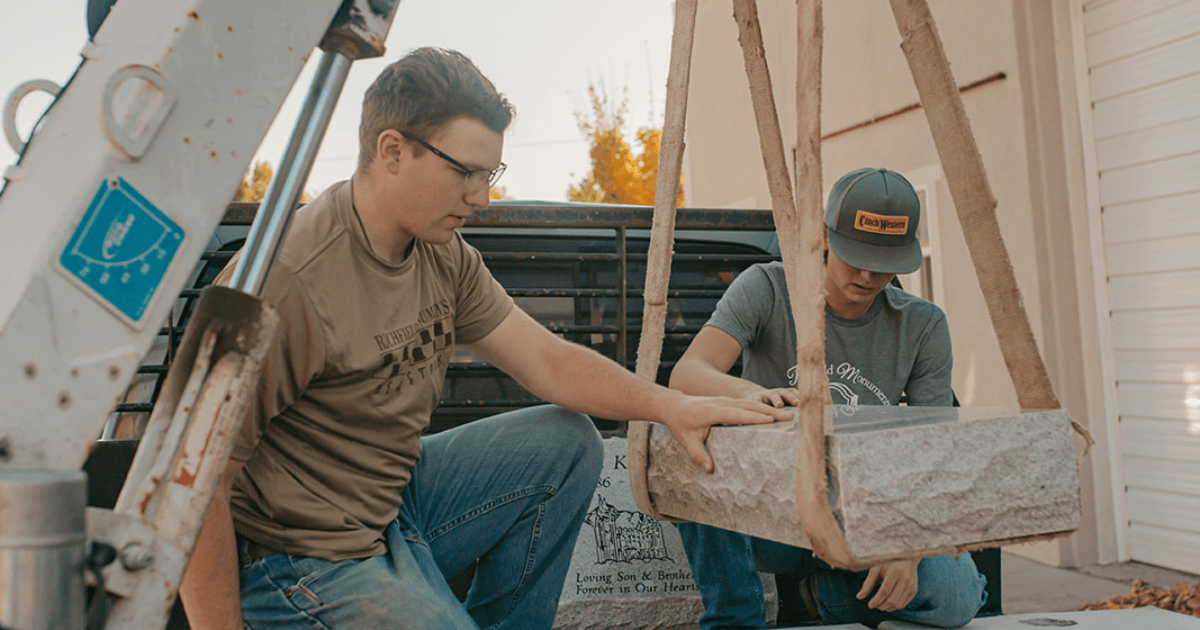
If you proceed with private land burial, a professional installation is just as important here as it is in a public cemetery. Without a proper concrete at frost depth, Utah's freeze-thaw cycles will shift or topple the monument within years.
Richfield Monuments installs monuments on private land as well as in established cemeteries. We assess site conditions, pour an appropriate , and install the monument to the same standards we apply to cemetery work. We can also advise on whether the site's soil and drainage conditions are suitable for a stable long-term installation.