Do Cemeteries Require a Certain Type of Headstone Base?
The base of a — the lower section that sits at or near ground level — is subject to its own set of cemetery regulations, separate from the monument itself. Many families don't realize base requirements exist until they're deep into the ordering process. Here's what to know before you finalize a design.
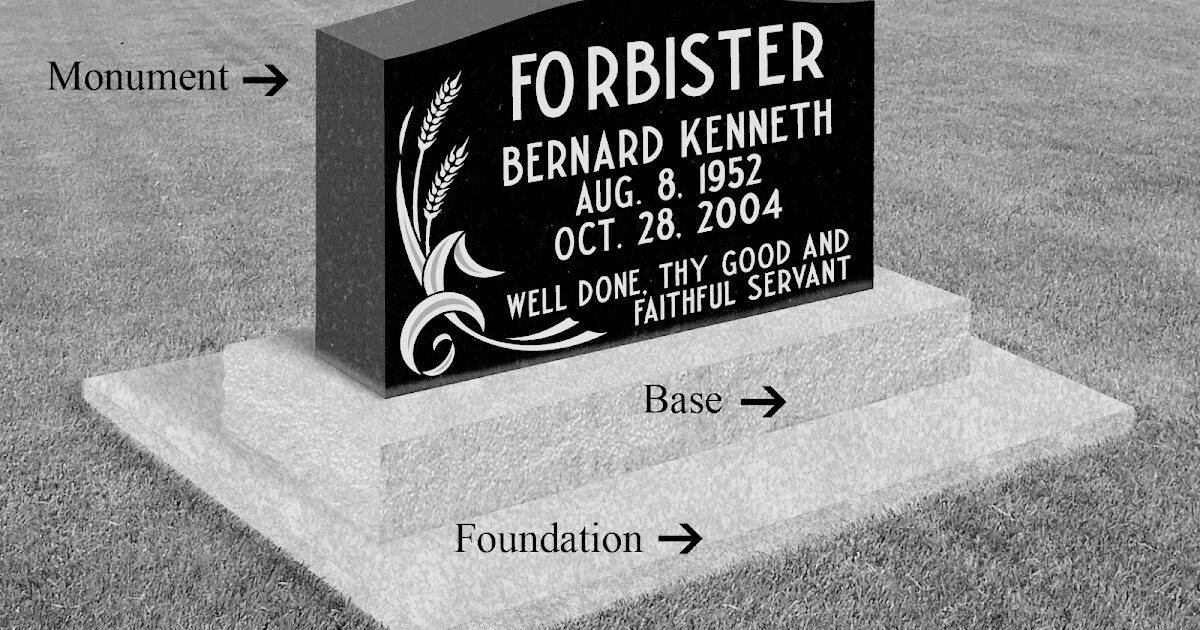
The Essential Role of a Headstone Base
A base serves both structural and aesthetic functions. Structurally, it provides a stable platform that spreads the monument's weight across a larger surface area, prevents the stone from sinking unevenly, and in conjunction with a concrete footing, resists frost heave. Aesthetically, it elevates the monument and creates a finished transition between the stone and the ground.
Most upright headstones consist of two pieces: the die (the main vertical stone with the ) and the base. They may be the same material and color or intentionally contrasting. Flat markers typically don't have a separate raised base, though some include a beveled or raised surround.
- Two-piece construction: die (upper stone) and base are standard for upright monuments
- Base distributes monument weight and resists uneven settling
- Base material and dimensions are regulated separately from the monument stone in many cemeteries
- Matching or contrasting for die and base is a common design choice
What Cemeteries Typically Regulate About Bases
Cemetery base regulations most commonly address: minimum base dimensions (length, width, and thickness), whether the base must be the same material as the monument, whether the base can extend beyond the plot boundary, and how the base must attach to the underlying concrete footing.
Some Utah cemeteries specify that bases must be and prohibit concrete or composite bases. Others allow concrete bases in certain sections. Some require a specific base-to-die ratio — for example, the base must extend at least two inches beyond the die on all sides.
- Minimum length, width, and thickness are the most commonly regulated base dimensions
- Material requirements vary: some cemeteries require bases only
- Overhang limits: base may not extend beyond the plot boundary
- Attachment method: base must be mortared or pinned to the concrete footing
- Veterans' sections often have strict base uniformity requirements
How Richfield Monuments Handles Compliance
Every monument Richfield Monuments produces is checked against the specific regulations of the cemetery where it will be installed. We request the cemetery's current regulations in writing before finalizing any design, and we flag any dimension or material issues before cutting begins.
This means families never receive a completed memorial that fails cemetery inspection. We handle coordination with the cemetery — including pre-installation approval submissions — as a standard part of every order.