What's the Difference Between a Headstone and a Gravestone?
People use 'headstone,' 'gravestone,' 'tombstone,' and 'grave marker' interchangeably in everyday conversation — and in most contexts, that's fine. But there are technical distinctions between these terms that matter when you're ordering a memorial or navigating cemetery documentation. Here's what each word actually means.
Historical Origins of the Terms
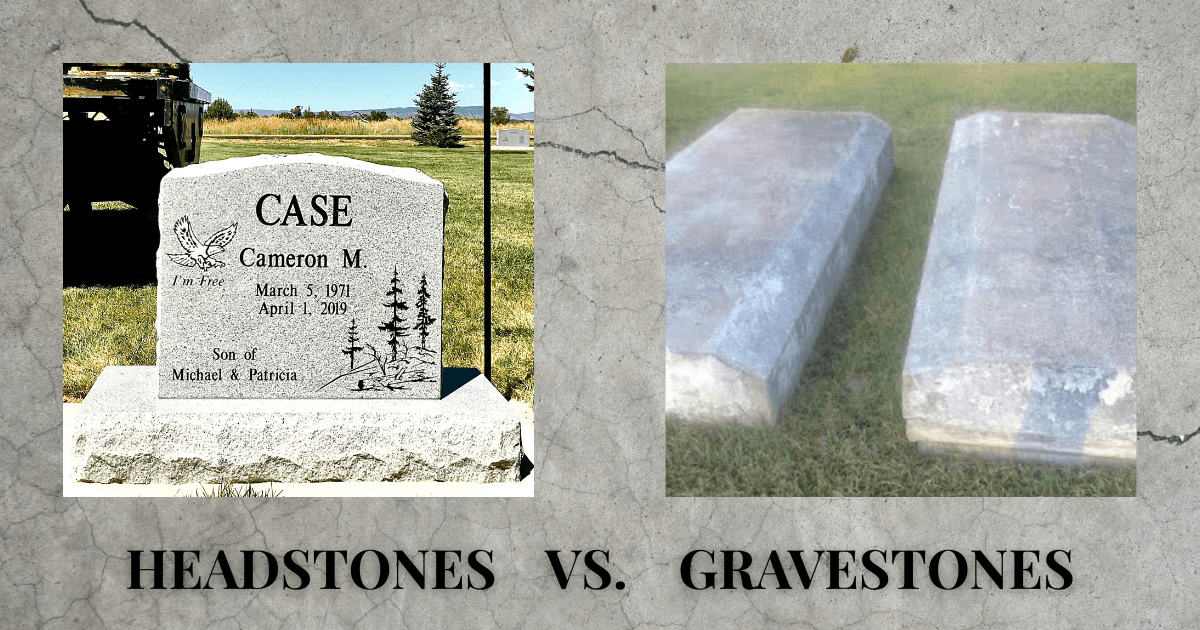
The term 'gravestone' is the oldest, referring to any stone placed at or over a grave — from the earliest flat fieldstone slabs laid directly on the ground to more elaborate carved monuments. It encompasses the entire category.
'' came into use to describe the stone placed specifically at the head of a grave, as opposed to a footstone placed at the feet. Over time, as footstones fell out of fashion, '' came to mean the primary upright monument marking a burial.
'Tombstone' technically refers to the stone slab placed over the top of an above-ground tomb or burial vault — a covering stone rather than an upright marker. In popular usage, it's often used as a synonym for or gravestone.
Upright Monuments
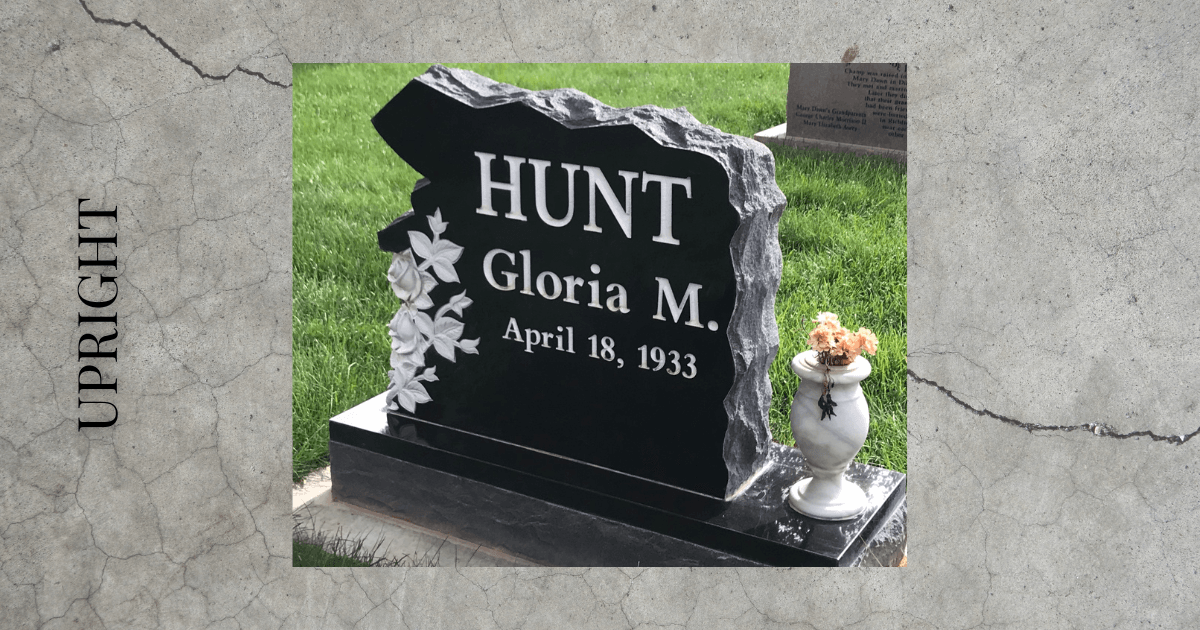
When most people picture a , they're imagining an upright monument: a vertical stone panel, usually with a shaped top (flat, oval, arched, or custom), mounted on a base. These are the most traditional and widely recognized form of cemetery marker.
Upright monuments provide the most surface area for and artwork, which is why they're the default choice for families who want to include significant design content. They're visible from a distance and command a clear presence in any cemetery.
- Most common form — a vertical stone panel on a base
- Available in a wide range of heights, widths, and top shapes
- Maximum surface area for inscription, symbols, and custom artwork
- Some Utah cemetery sections restrict or prohibit upright monuments — confirm before ordering
Flat Markers
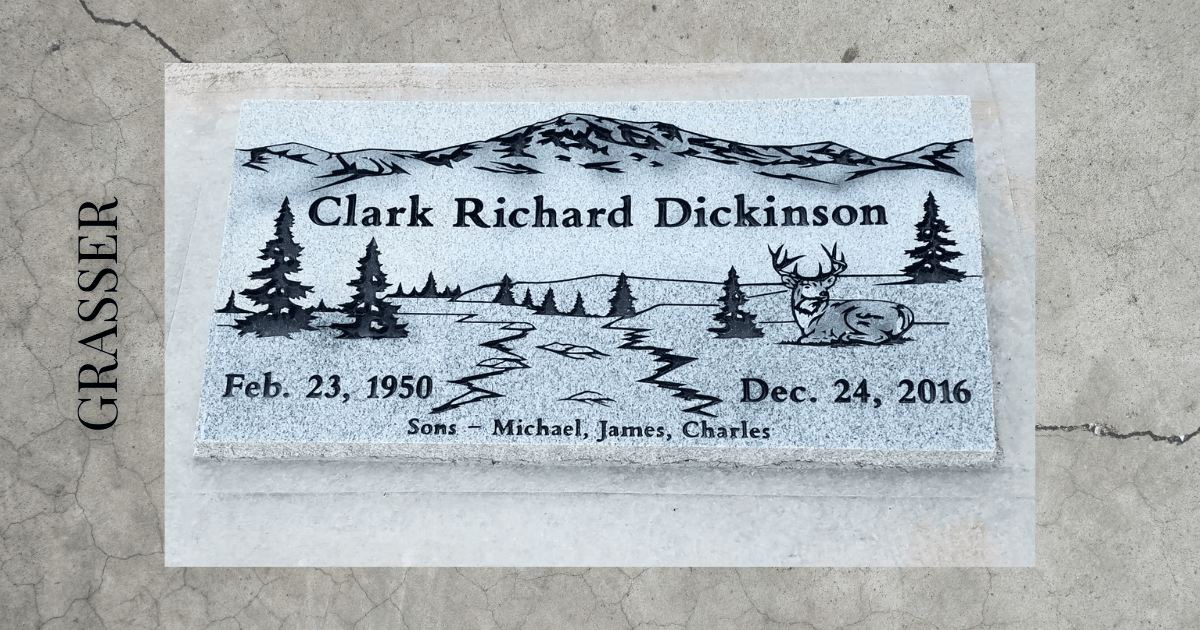
Flat markers — also called flush markers, grass markers, or lawn-level markers — lie horizontally at or just above ground level. They're required in many Utah cemetery sections to enable uniform lawn maintenance. Veterans' sections commonly require them.
Flat markers can be just as personalized as upright monuments — they support custom , laser-etched artwork, and inlay — but their horizontal orientation limits the available area.
- Lie at or just above ground level for easy lawn maintenance
- Required in many Utah cemetery sections and most veterans' sections
- Support full custom and artwork despite horizontal orientation
- Beveled (raised-edge) flat markers add visual prominence while staying close to ground level
Slant Markers
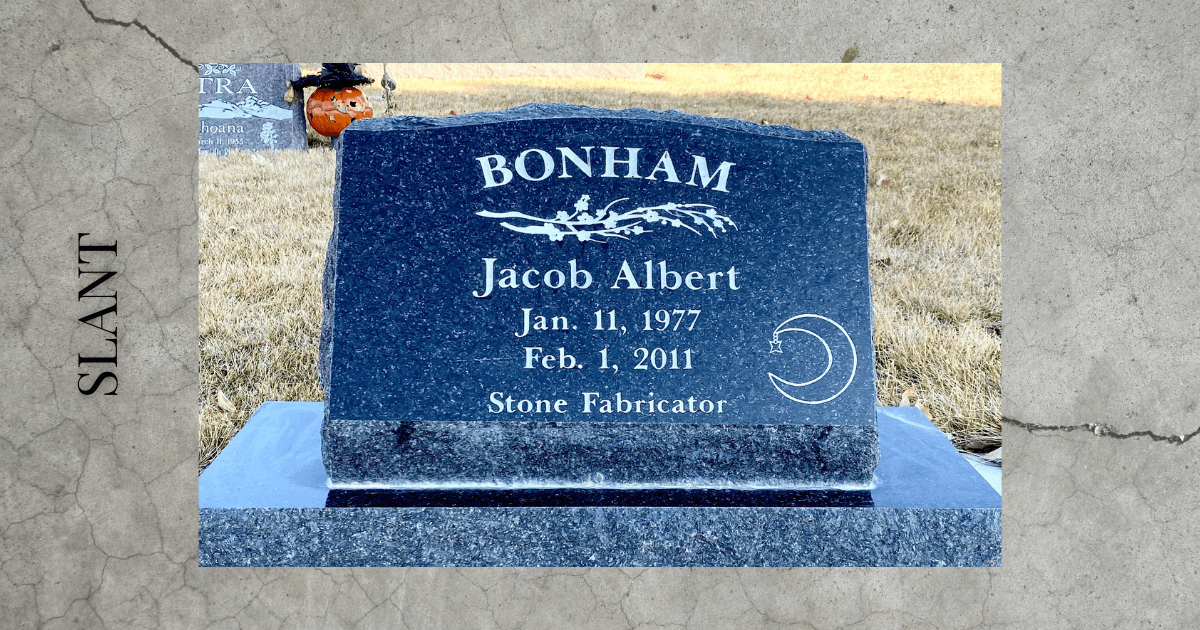
Slant markers (also called slant headstones or pillow markers) have an angled face that tilts back from the base, typically at about 45 degrees. The angled surface faces the visitor directly, improving legibility at a normal standing distance.
Slant markers are widely permitted in Utah cemeteries where upright monuments are not allowed, making them a practical choice when cemetery rules restrict monument height. They're also a popular design choice independent of restrictions because of their clean, traditional appearance.
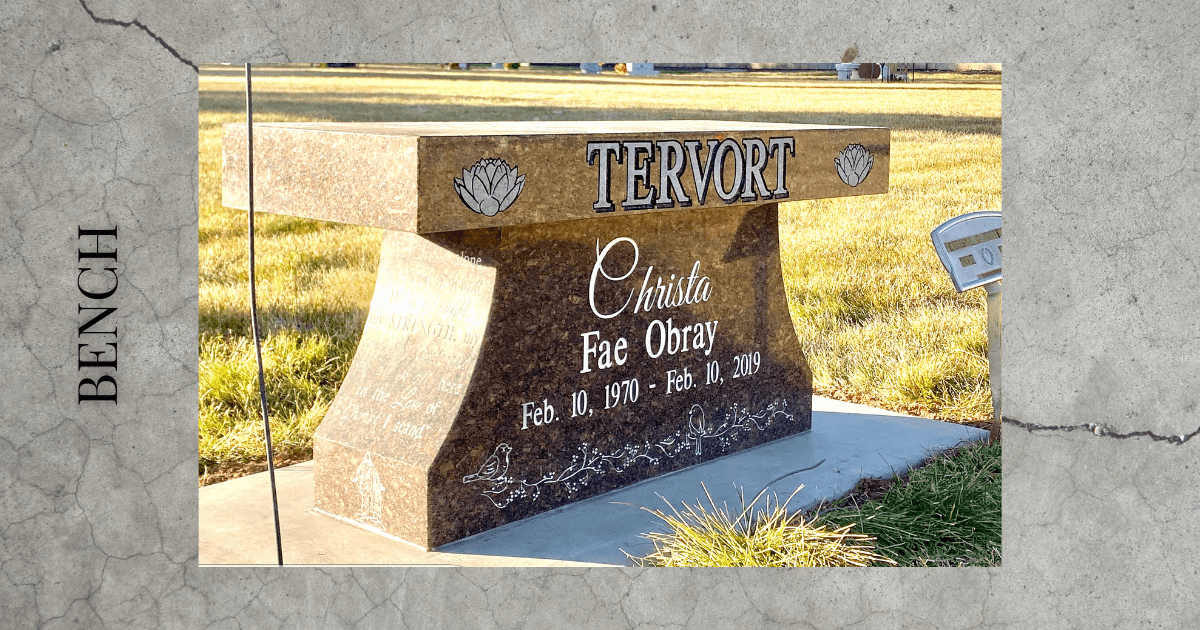
Benches and Sculptures
Beyond traditional forms, some families choose memorial benches — a functional memorial that invites visitors to sit and reflect — or custom sculptural elements like pedestals with urn tops, cross monuments, or obelisks. These are typically reserved for larger plots or for families who want a more distinctive memorial presence.
Richfield Monuments produces benches, specialty shapes, and custom sculptural pieces alongside traditional monuments. All are made from the same durable that characterizes our standard work.