How Are Headstones Secured to the Ground?
A headstone that leans, tilts, or topples didn't fail because of the stone itself — it failed because of inadequate anchoring. Understanding how professional installation secures a to the ground helps families appreciate what's included in a proper installation and what to ask for when ordering.
The Role of Foundations
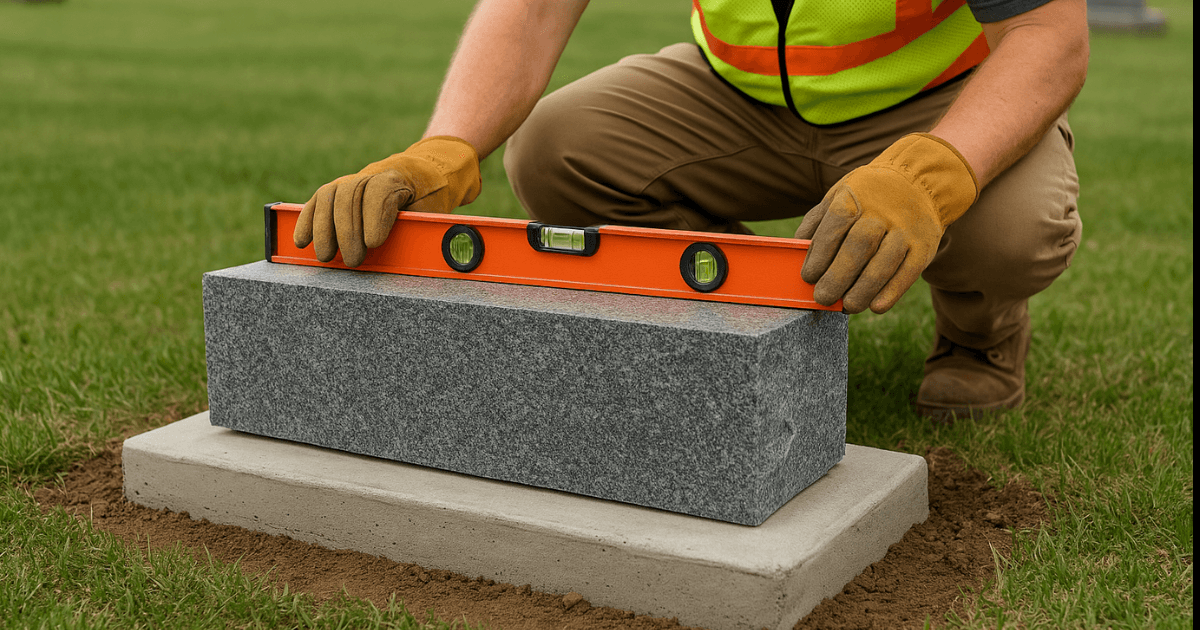
The concrete footing () is the most critical element of security. It extends below the frost depth — typically 24–36 inches in Central Utah — to prevent freeze-thaw cycles from shifting the monument. The larger surface area of the footing distributes the monument's weight across more soil, preventing uneven settlement.
Foundations are typically poured concrete, often reinforced with rebar for larger monuments. The dimensions are governed by the monument's weight and the cemetery's specific requirements. Richfield Monuments pours footings as part of every installation — families don't manage this separately.
- Concrete footing extends below frost depth to resist seasonal heave
- Rebar reinforcement adds tensile strength to the footing for large monuments
- Footing dimensions are proportional to monument weight
- The footing cures for 24–48 hours before the monument is set
Adhesive Bonding
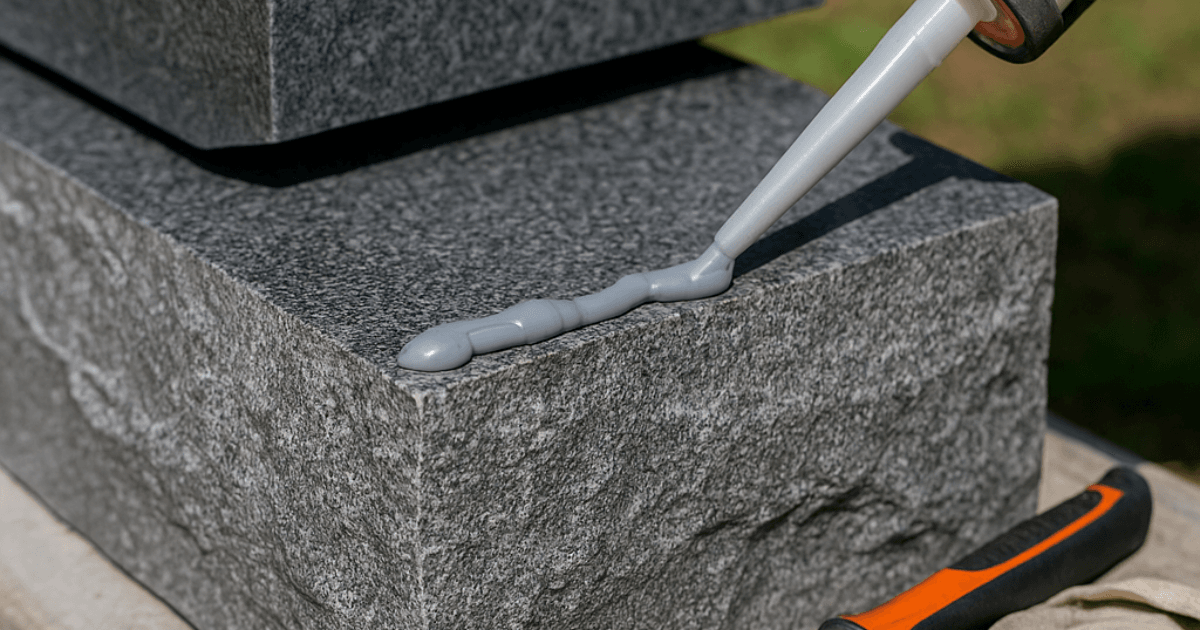
Mortar or epoxy is used to bond the base to the footing and the die (upper stone) to the base. Properly applied, these bonds prevent any lateral movement of the monument components relative to each other. Without bonding, even a monument on a perfect foundation can work loose over time as thermal expansion and contraction cycle the components against each other.
Two-part epoxy systems used in monument work are designed for permanent outdoor bonding to stone and concrete. They're weatherproof, flexible enough to handle thermal movement without failing, and far stronger than traditional mortar for this application.
- Mortar: traditional bonding material, widely used and durable for monument work
- Two-part epoxy: modern standard for die-to-base bonding — stronger and more weatherproof than mortar
- Both die and base are bonded to prevent any independent movement
- Bonding is inspected before the job is considered complete
Why Professional Installation Matters
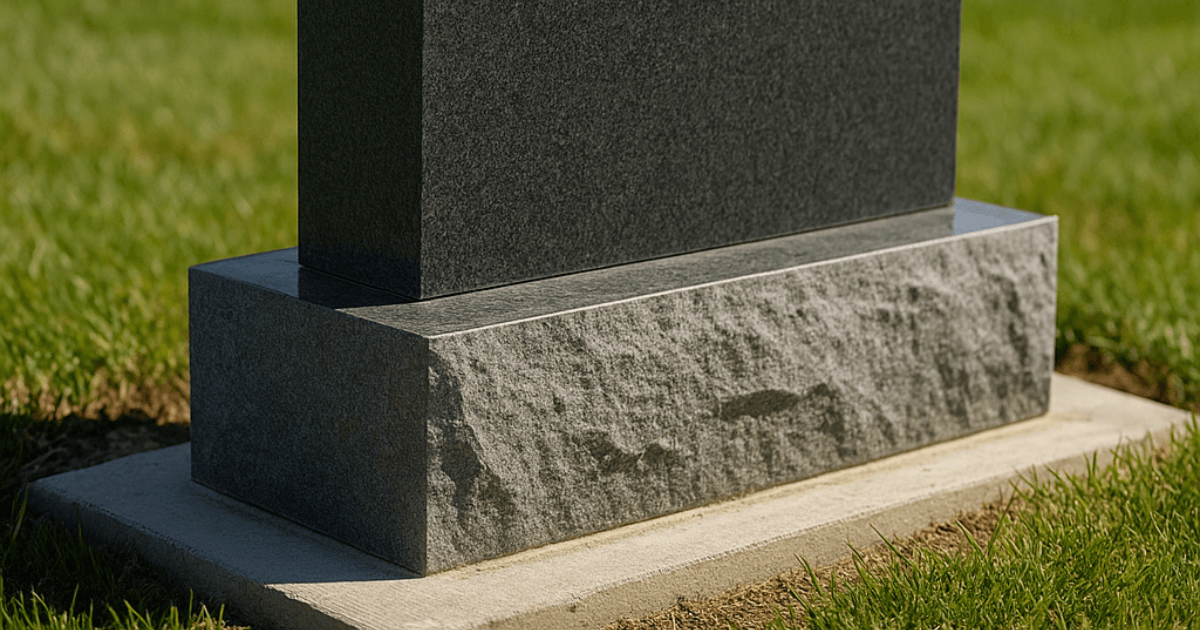
Professional monument installation isn't just about having the right equipment — though that matters. It's also about knowing the specific requirements of each cemetery, understanding how local soil conditions affect design, and having the experience to recognize when something needs to be done differently.
A monument that tilts within five years is expensive to correct and distressing to the family that ordered it. Richfield Monuments backs every installation with our workmanship — if a monument we install develops a stability issue due to our installation work, we address it. That's our commitment to the families we serve.
- Cemetery-specific requirements must be met to pass inspection
- Soil conditions vary — clay-heavy soils require different footing designs than rocky or sandy soils
- Professional equipment handles the weight and precision placement that hand-setting cannot achieve safely
- Richfield Monuments warrants our installation workmanship