Are Upright Headstones Allowed in All Utah Cemeteries?
Not every Utah cemetery allows every type of . Upright monuments — the classic tall, vertical stone — are the most recognizable memorial style, but some cemeteries require flat markers exclusively. Before ordering an upright , confirming your cemetery's rules prevents a costly mistake.
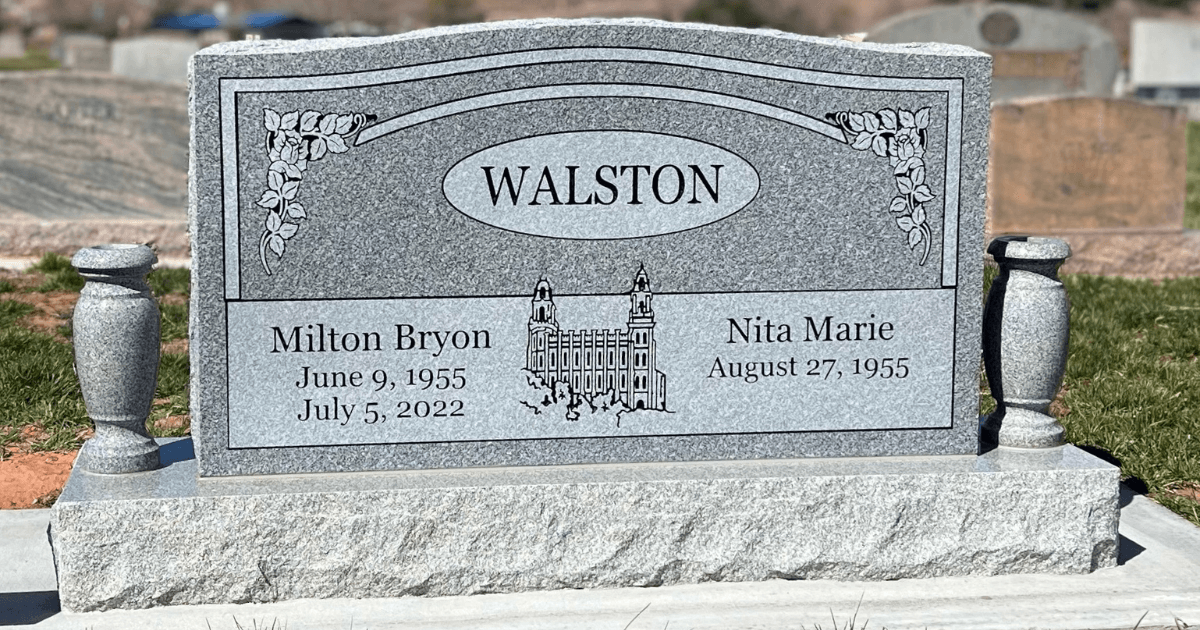
What Is an Upright Headstone?
An upright is a vertical monument that stands above ground level, typically consisting of a base (the lower supporting block) and a die (the upper inscribed panel). They range from modest single-die markers measuring 18–24 inches tall to elaborate multi-component monuments several feet high.
Upright headstones are the style most people picture when they imagine a traditional grave marker. They're visible from a distance, provide more and artwork space than flat markers, and tend to serve as the most personal expression of a memorial.
- Single die: one-piece upright marker without a separate base
- Die on base: the most common configuration — a decorative base with a taller vertical die
- Bevel marker: a thick, low-profile marker that sits at a slight angle — not fully upright
- Slant marker: angled face, taller than flat but shorter than a full upright
Are Upright Headstones Allowed in All Utah Cemeteries?
No — upright headstones are not permitted in all Utah cemeteries. Cemetery rules on monument style vary significantly by cemetery type and individual cemetery policy.
Many older municipal and religious cemeteries in Central Utah permit upright monuments throughout. Some newer sections of these same cemeteries — or entirely newer cemeteries — require flat markers to simplify lawn maintenance. Veterans' cemeteries typically have very specific rules about monument style, size, and material. Private cemeteries set their own rules.
Sections within the same cemetery may have different rules. A traditional section may allow upright monuments while an adjacent newer section requires flat markers only. This is why checking section-specific rules — not just the cemetery's general policy — matters.
Why Choose an Upright Headstone?
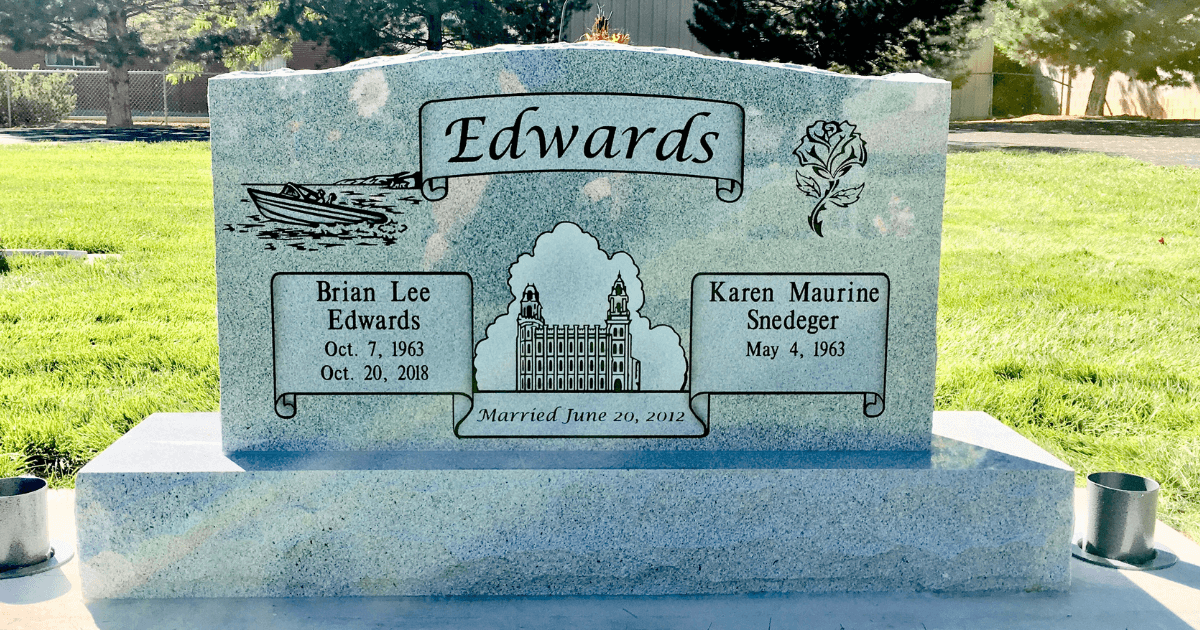
Where cemeteries permit it, upright headstones offer advantages that flat markers cannot match: they're more visible both from a distance and when standing at the grave, they provide significantly more surface area for inscriptions and artwork, and their vertical profile makes them a stronger visual presence in the landscape.
Companion monuments — a single monument spanning two spaces for a husband and wife — are most naturally realized as upright designs. The visual weight of an upright monument also communicates permanence and significance in a way that a flush flat marker simply cannot.
How to Check Cemetery Regulations in Utah
The most reliable way to confirm what's permitted is to contact the cemetery office directly and ask for their written monument regulations. Specifically ask about: monument style (upright, flat, bevel, slant), maximum dimensions, minimum dimensions, required materials, requirements, and any restrictions on color or finish.
Richfield Monuments verifies cemetery requirements for every order we take. If you're not sure where to start, contact us with the cemetery name and section, and we'll confirm what's allowed before any design decisions are made.
- Contact the cemetery office and request written monument regulations
- Ask specifically about style restrictions (upright vs. flat), not just size limits
- Confirm rules for your specific section — not just the cemetery's general policy
- Ask whether grandfathered monuments affect what adjacent plots may use
- Richfield Monuments verifies requirements as part of every consultation