Planning a Headstone With Your Spouse: What Couples Can Decide Together Now
Planning a headstone together may feel unusual at first. For many couples, however, it can be a thoughtful way to make personal decisions while there is plenty of time to talk, compare ideas, and make choices without the pressure that often comes after a death.
You do not have to plan every detail. The goal is simply to decide the things that matter most to both of you and leave clear guidance for the parts that can be completed later.
For couples considering a companion monument or shared cemetery space, making a few decisions now can help ensure the final memorial reflects both people rather than leaving one spouse or other family members to guess.

Start With the Cemetery Location
Before choosing granite colors, artwork, or inscriptions, begin with the cemetery.
If you already own burial plots, write down the cemetery name, section, lot, and grave information. If you have not selected a cemetery yet, talk about where each of you would prefer to be buried and whether being placed beside one another is important.
This decision matters because cemeteries can have their own requirements for monument size, style, foundations, placement, and decorations. Richfield City publishes its own cemetery policies and monument requirements, which is a good reminder that families should verify the rules for their specific cemetery before finalizing a memorial.
The important thing is not to assume that every monument style is permitted everywhere. Confirming the cemetery first gives you a practical starting point for the rest of the design.
Decide Whether You Want a Companion Monument
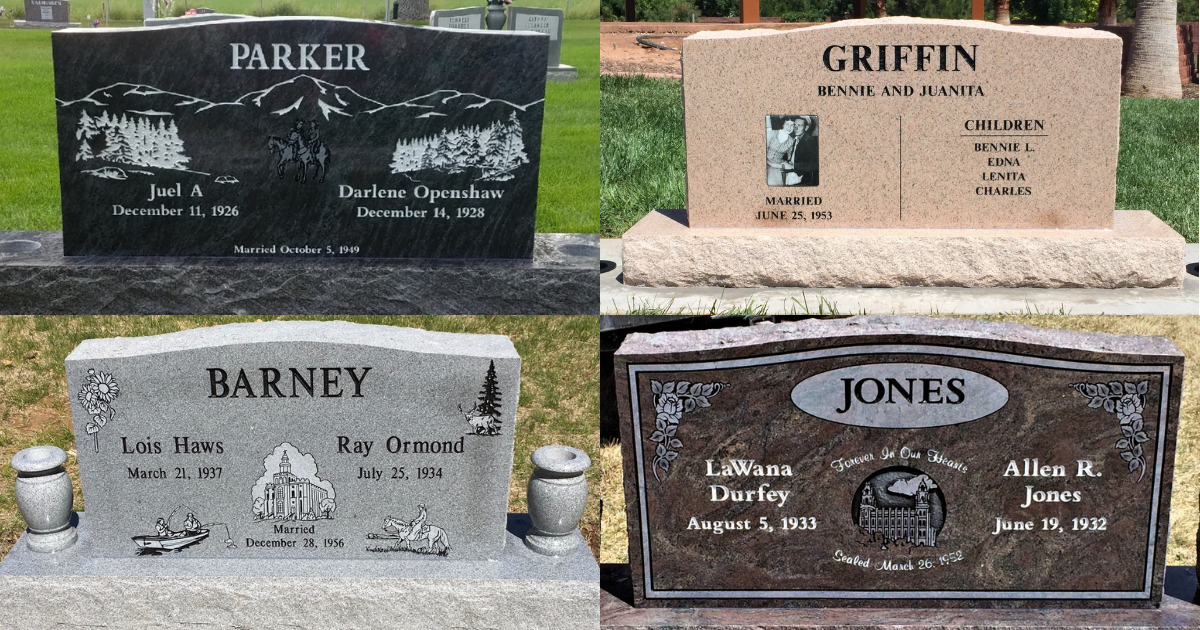
Many married couples choose a companion headstone designed to memorialize two people on one monument.
That does not mean every couple has to choose the same style. Some prefer one shared upright monument, while others may prefer coordinating individual markers.
Questions worth discussing include:
- Do we want one shared monument or separate markers?
- Do we want our names presented equally?
- Should the monument emphasize our marriage, our family name, or each of us individually?
- How much room should be reserved for future information?
- Would we want space for artwork, photographs, symbols, or a short inscription?
Richfield Monuments specifically discusses planning for companion and family plots as part of the monument-design process. Their guidance also recommends considering cemetery requirements before a design is finalized.
Choose a Monument Style You Both Like
One spouse may picture a traditional upright monument while the other prefers something simple and understated.
Neither preference is wrong.
For ideas on balancing personal preferences with a lasting design, see Tips for Designing a Unique and Timeless Headstone.
Appearance
Do you prefer traditional, contemporary, simple, decorative, or highly personalized?
Visibility
Would you like a monument that is easy for family members to locate when visiting the cemetery?
Personalization Space
If you want inscriptions, symbols, artwork, photographs, or a longer family message, you may need more usable design space.
Cemetery Requirements
Never choose a style solely from a photograph without checking whether the cemetery permits that size and configuration. Richfield Monuments' own guidance notes that Utah cemetery regulations vary and recommends confirming section-specific requirements and obtaining approval before ordering. For more on upright styles, read Are Upright Headstones Allowed in All Utah Cemeteries?.
Talk About Granite Color and Overall Look
Granite contributes significantly to the appearance of a finished monument.
Couples do not necessarily need to know the exact granite selection immediately, but it helps to talk about what you both like.
Do you prefer dark granite with strong contrast? Traditional gray tones? Warmer colors? A highly polished appearance? A quieter, more natural finish?
Looking at physical granite samples together can be helpful because stone can look different in person than it does on a screen.
This is also a good time to think about how the granite will work with the lettering and artwork you prefer. Richfield Monuments recommends considering appearance, durability, cemetery restrictions, and long-term maintenance when selecting memorial materials.
Decide How You Want Your Names Presented
A companion headstone naturally raises questions about names and family identity.
Couples may want to discuss full legal names versus commonly used names, middle names or initials, maiden names, a shared surname, nicknames, a marriage date, and family roles such as Mother, Father, Grandma, or Grandpa.
You do not have to use every available piece of information.
In fact, a thoughtful memorial often benefits from deciding which details are truly important rather than trying to fit an entire biography onto the stone.
One useful question to ask is:
If a great-grandchild stood here many years from now, what would we most want that person to know about us?
That question can help simplify the design.
Discuss Inscriptions While You Can Choose Them Together
A shared inscription can be one of the most personal parts of a companion monument.
Some couples choose a short expression of love, meaningful scripture, a family saying, a statement about faith, or a phrase connected to home, family, service, or shared values.
You do not need to settle on final wording during the first conversation.
Instead, each spouse might make a short list of words, scriptures, sayings, or ideas that feel meaningful. Compare the lists later and see where they overlap.
Planning ahead gives both people a voice.
Richfield Monuments also recommends keeping inscriptions meaningful and readable instead of trying to include too much information on one memorial.
Decide Whether Religious or Personal Imagery Belongs on the Monument
Artwork can make a memorial feel deeply personal, but it is worth choosing together.
Couples may want to include religious imagery, landscape scenes, flowers, family symbols, hobbies, occupations, military references, or other meaningful artwork.
Ask yourselves whether your shared faith is important to the memorial, whether there is a meaningful landscape or hometown image connected to your life together, and whether the monument should highlight shared interests or leave room for something unique to each spouse.
Richfield Monuments offers custom artwork and describes symbols, hobbies, occupations, religious imagery, and other meaningful designs as ways to personalize a headstone.
The purpose of personalization is not to fill every available space. It is to choose details that genuinely help tell your story.
Decide What Can Be Completed Later
One of the most useful parts of planning a headstone with your spouse is realizing that you do not have to finalize everything today.
A companion monument can be planned with information that is known now while leaving future information to be completed when needed.
Couples may be able to decide now on the cemetery location, monument style, granite, overall layout, names, shared artwork, family name, marriage date, shared inscription, and religious imagery.
Naturally, certain details remain for later, including a final date of death and other information that cannot yet be known.
Richfield Monuments specifically recommends leaving room for future additions such as a spouse's information when designing a companion monument.
Leaving some information unfinished is not a flaw in the design. It is part of planning realistically.
Write Down the Decisions You Make
Even a wonderful conversation can be forgotten years later.
Once you have agreed on the basics, create a simple written record containing your cemetery and plot information, preferred monument style, granite preferences, names as they should appear, desired family name, inscription ideas, religious or personal artwork, whether you prefer one companion monument or separate markers, and where important cemetery paperwork is stored.
Give a copy to a trusted family member or tell your children where the information can be found.
This can be especially valuable when both spouses have participated in the decisions. Your family will know these were choices you made together rather than assumptions made later.
If Either Spouse Is a Veteran, Review Memorial Benefits Early
If either spouse served in the military, burial and memorial benefits are worth researching while you are planning.
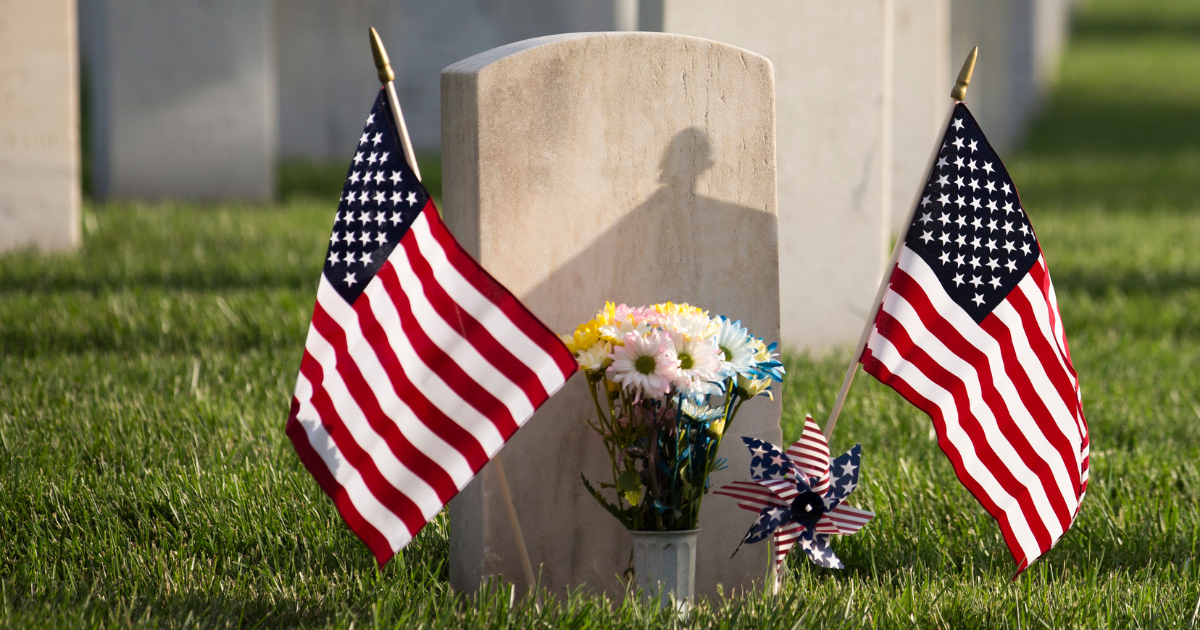
The U.S. Department of Veterans Affairs allows eligible Veterans and certain family members to apply in advance for a pre-need determination of eligibility for burial in a VA national cemetery. The VA explains that doing this ahead of time can make future planning easier for family members.
See VA Pre-Need Burial Eligibility for current details.
The VA also provides government-furnished headstones and markers for eligible Veterans under certain circumstances. Requirements differ depending on the cemetery and type of burial, so military families should review the current rules before making final monument decisions.
If military service is part of your family's story, keep eligibility information and military documents with your other memorial-planning paperwork.
Planning Together Is About Giving Each Other a Voice
Planning a headstone with your spouse is not about dwelling on death.
It is about making sure that when the time eventually comes, the memorial reflects decisions you made together.
You can choose the cemetery. You can talk about the monument style. You can compare granite colors. You can decide whether a shared inscription, religious symbol, family name, photograph, or meaningful image belongs on the stone.
And you can intentionally leave future details unfinished.
That balance—deciding what matters now while allowing life to unfold—is often the most practical way to plan.
For couples in Richfield and throughout Central Utah who would like help exploring companion monuments and memorial-design options, Richfield Monuments can help you work through those decisions thoughtfully and at your own pace.